


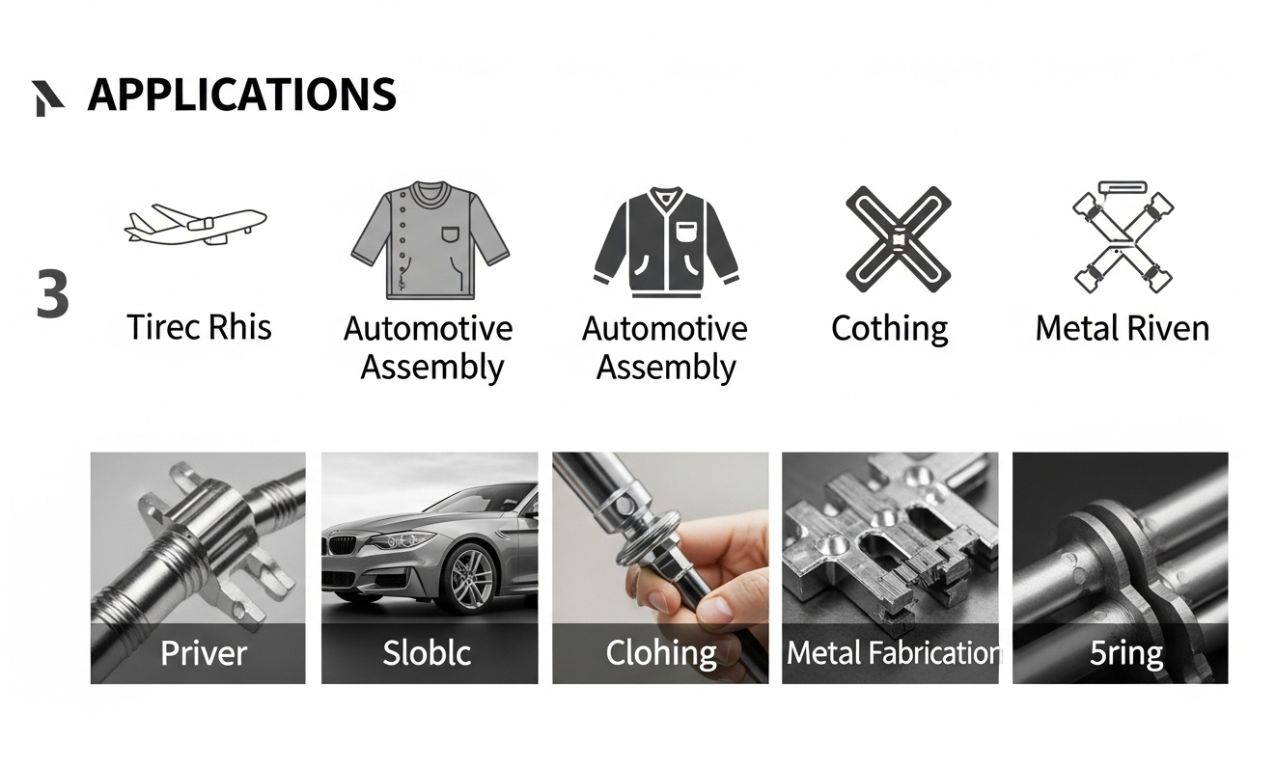
A rivet is a mechanical fastener used to join two or more materials together, typically metal, by inserting a metal pin or bolt through aligned holes and deforming the tail to hold it in place. Rivets are essential in construction, manufacturing, and engineering, providing a durable and permanent method of fastening components.
Understanding the rivet definition, its types, and applications is crucial for engineers, builders, and anyone involved in mechanical or structural projects.
Rivet Definition and Function
Basic Definition
A rivet is a cylindrical or round-headed metal fastener that is inserted into pre-drilled holes of materials and then deformed on the tail end to secure the materials together permanently. Unlike screws or bolts, rivets do not rely on threads; instead, the deformed tail provides a strong, permanent joint.
Primary Functions
-
Join Materials Permanently: Rivets are used where a long-lasting joint is required.
-
Distribute Load Evenly: Riveted joints can spread stress across connected materials, reducing the risk of failure.
-
Durability: Rivets are highly resistant to vibration and loosening, making them ideal for machinery, bridges, and aircraft.
Types of Rivets
Solid Rivets
Solid rivets are one of the most common types, consisting of a solid metal pin that is hammered or pressed to form a head on the tail side. They are widely used in heavy engineering and construction.
Applications: Aircraft, bridges, ships, and steel structures.
Blind Rivets (Pop Rivets)
Blind rivets, also known as pop rivets, can be installed from one side of the material. They are ideal for situations where access is restricted.
Applications: Automotive repairs, sheet metal work, and DIY projects.
Tubular Rivets
Tubular rivets have a hollow shaft and are easier to deform than solid rivets. They are commonly used in leatherwork, belts, and light metal assemblies.
Applications: Leather goods, musical instruments, and light machinery.
Semi-Tubular Rivets
These rivets have a partial hole in the tail, making them easier to form than solid rivets but stronger than fully tubular rivets.
Applications: Light to medium assembly in electronics and metalworking.
Specialized Rivets
Other specialized rivets include countersunk rivets, structural rivets, and self-piercing rivets, designed for specific engineering requirements.
Materials Used for Rivets
Rivets are made from various metals depending on the application:
-
Steel: High strength and widely used in construction and manufacturing.
-
Aluminum: Lightweight and corrosion-resistant, ideal for aircraft and vehicles.
-
Copper: Good conductivity and aesthetic finish, often used in decorative or electrical applications.
-
Brass: Corrosion-resistant and decorative.
The choice of material depends on strength requirements, environmental conditions, and compatibility with the joined materials.
Rivet Installation Process
Drilling and Preparation
Holes are drilled in the materials to be joined. The holes must align perfectly for the rivet to function correctly.
Inserting the Rivet
The rivet is inserted through the aligned holes. For blind rivets, a rivet gun is often used.
Deforming the Tail
The tail is deformed (hammered or pressed) to form a second head, securing the rivet in place. This process ensures a tight, permanent connection between materials.
Applications of Rivets
Construction and Civil Engineering
Rivets are used in bridges, steel structures, and large buildings to provide strong joints capable of bearing heavy loads.
Aerospace and Aviation
Aircraft construction often relies on rivets to secure aluminum panels and structural components due to their lightweight and durability.
Automotive Industry
Rivets are used to join body panels, interior components, and structural parts of cars and trucks.
Shipbuilding and Marine Applications
Ships and boats use corrosion-resistant rivets to join metal plates and ensure watertight integrity.
Everyday Uses
Rivets are also found in everyday items like jeans, belts, leather goods, and tools for decorative or functional purposes.
Advantages of Rivets
-
Durable and Reliable: Provide long-lasting joints resistant to vibration and loosening.
-
Versatile: Can join different materials like metals, plastics, and leather.
-
Permanent: Once installed, rivets create a solid, permanent connection.
-
Efficient: Suitable for mass production and high-strength applications.
Rivet vs. Screw vs. Bolt
| Feature | Rivet | Screw | Bolt |
|---|---|---|---|
| Removability | Permanent | Removable | Removable |
| Installation | Hammer or rivet gun | Screwdriver | Wrench |
| Load Distribution | Spreads evenly | Point load | Point load |
| Use Case | Structural, heavy-duty joints | Furniture, DIY | Mechanical assemblies |
This comparison highlights why rivets are preferred for permanent, high-strength connections.
Conclusion
A rivet is a simple yet essential mechanical fastener that provides permanent, durable connections across a variety of industries. From bridges and aircraft to clothing and electronics, rivets play a vital role in engineering and everyday applications. Understanding the rivet definition, types, materials, and installation process is fundamental for engineers, technicians, and hobbyists alike.
Whether you are in construction, manufacturing, or DIY projects, rivets remain a reliable solution for joining materials efficiently and securely.