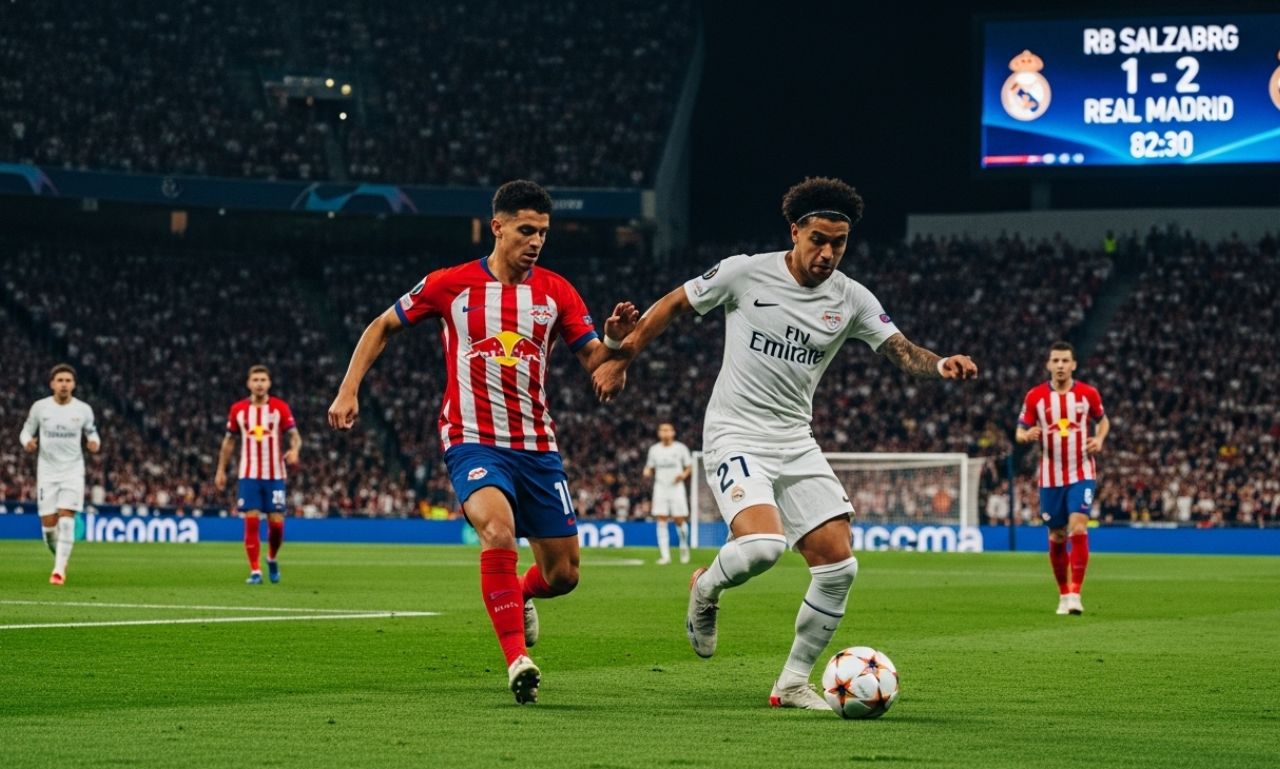
The clash between RB Salzburg and Real Madrid has captured the attention of football fans around the world, showcasing a dramatic contrast between Austria’s talented club and one of Europe’s most decorated teams. These meetings have taken place in high‑profile competitions — most notably the 2024‑25 UEFA Champions League and the 2025 FIFA Club World Cup — highlighting tactical battles, star performances, and the ongoing quest for continental and global glory.
A Brief Background on the Clubs
FC Red Bull Salzburg is one of Austria’s most successful teams, known for developing young talents and competing regularly in European competitions. They have qualified for the Champions League group stage multiple times in recent seasons and continue to build their reputation on the continental stage.
Real Madrid CF, by contrast, is one of the most successful clubs in football history, with a record number of UEFA Champions League titles (14) and a long tradition of excellence in both domestic and European competitions. Real Madrid regularly advances deep into major tournaments and attracts global stars.
First Major Meeting: Champions League Clash
The two clubs met during the 2024‑25 UEFA Champions League, producing one of the most memorable and one‑sidedresults of the season. At the Santiago Bernabéu Stadium, Real Madrid delivered a dominant performance, defeating Salzburg 5‑1.
Highlights from that Match
-
Rodrygo opened the scoring with two goals early in the match.
-
Kylian Mbappé added another for Madrid shortly after halftime.
-
Vinícius Júnior netted twice, rounding off the dominant display.
-
Mads Bidstrup scored a consolation goal for Salzburg.
The result showcased Madrid’s attacking firepower and experience at the highest level, with their forwards combining clinical finishing and tactical awareness to overwhelm Salzburg’s defense.
FIFA Club World Cup Encounter
The clubs met again in the 2025 FIFA Club World Cup, this time in the Group H stage of the tournament held in Philadelphia, USA. In a decisive showdown that would determine group standings and progression to the round of 16, Real Madrid emerged victorious with a 3‑0 win over RB Salzburg.
Match Summary
-
Vinícius Júnior opened the scoring, finishing a run that showed his trademark pace and skill.
-
Before halftime, Vinícius assisted Federico Valverde to double the lead with a creative backheel pass.
-
Gonzalo García sealed the 3‑0 victory late in the game, ensuring Madrid finished top of their group and secured advancement.
The win was pivotal for Real Madrid, confirming them as group leaders and setting up a knockout tie against Juventus in the next round. Salzburg’s elimination meant their Club World Cup campaign ended at the group stage.
Key Players and Performances
For Real Madrid
-
Vinícius Júnior was a standout performer, contributing both a goal and an assist and showcasing his importance in big‑game scenarios.
-
Other influential figures like Rodrygo and Mbappé demonstrated Madrid’s depth in attack, combining pace, creativity, and versatility from wide positions.
For Salzburg
While Salzburg faced heavy challenges against a powerhouse like Madrid, they continued to show resilience and tactical ambition. Matches against elite teams provide valuable experience for their young squad and highlight areas for growth in European competition.
What These Matches Mean for Both Clubs
Real Madrid
These victories reinforced Real Madrid’s status as a global football juggernaut. In the Champions League, it showcased their ability to dominate top‑level European competition, while in the Club World Cup, they proved they can adapt to international tournaments and secure key wins when it matters most.
Salzburg
For RB Salzburg, facing a club like Real Madrid is an opportunity to measure their progress and ambition. Competing against elite opposition offers experience and exposure that can benefit player development and tactical growth.
Head‑to‑Head Summary
While matches between these teams remain limited, Real Madrid holds the upper hand thanks to their wins in high‑profile competitions — both in the Champions League and at the Club World Cup stage. Their ability to score freely and control games against Salzburg underscores the gap between Europe’s elite and rising challengers.
Conclusion
The RB Salzburg vs Real Madrid encounters provide a compelling example of how football bridges different leagues and cultures. Although Salzburg continues to rise as a competitive European side, Real Madrid’s experience, star quality, and tactical strength have proved decisive in their recent matchups. These games don’t just reflect results, but also the contrasting journeys of two clubs — one established as a global giant and the other forging its path toward greater prominence in international football.