Understanding the California time zone is essential for travelers, businesses, remote workers, and anyone coordinating activities across different regions. California, one of the most populous and economically significant states in the United States, follows a standard time system that affects schedules, communication, and daily life.
What Is the California Time Zone?
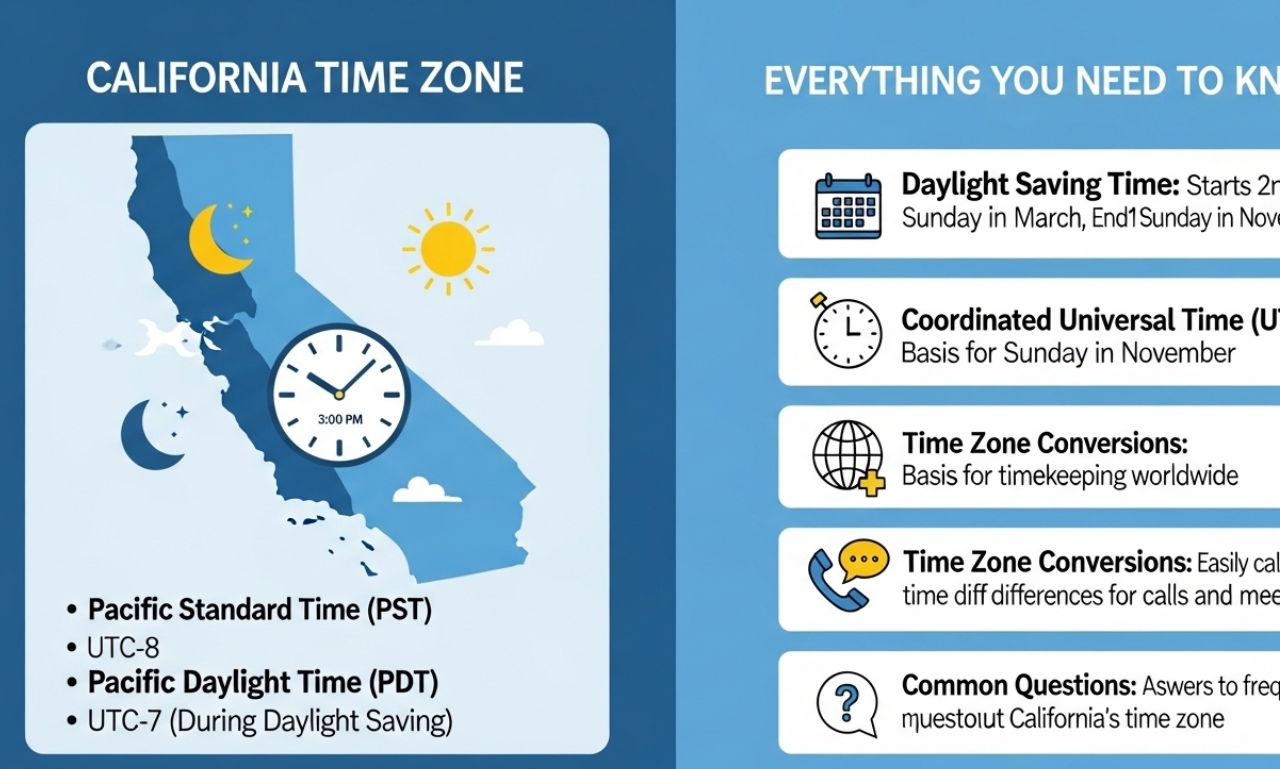
California operates in the Pacific Time Zone (PT), which is 8 hours behind Coordinated Universal Time (UTC−8) during standard time. This time zone is shared with other states on the U.S. West Coast, including Washington, Oregon, and parts of Nevada.
During daylight saving time (DST), California observes Pacific Daylight Time (PDT, UTC−7), which typically begins in March and ends in November. This one-hour adjustment helps make better use of daylight during the longer days of summer.
Standard Time vs. Daylight Saving Time
1. Pacific Standard Time (PST)
-
Observed during fall and winter months
-
UTC−8
-
Example: When it is 12:00 PM (noon) PST in California, it is 3:00 PM EST (Eastern Standard Time) in New York.
2. Pacific Daylight Time (PDT)
-
Observed during spring and summer months
-
UTC−7
-
Example: When it is 12:00 PM PDT in California, it is 3:00 PM EDT in New York.
Daylight saving time in California typically starts on the second Sunday of March and ends on the first Sunday of November.
Why Time Zones Matter in California
California’s time zone is particularly important because of the state’s global influence:
-
Business & Finance: Major companies in Silicon Valley, Los Angeles, and San Francisco coordinate operations across multiple time zones worldwide.
-
Travel & Transportation: Flight schedules, train timetables, and shipping services rely on accurate Pacific Time information.
-
Entertainment & Media: Hollywood studios, television networks, and live events schedule releases and broadcasts based on PT.
-
Remote Work & Communication: With California being home to tech companies and international offices, understanding time differences is crucial for productivity.
How California Time Compares to Other U.S. Time Zones
California (Pacific Time) is:
-
3 hours behind Eastern Time (ET) — New York, Miami
-
2 hours behind Central Time (CT) — Texas, Illinois
-
1 hour behind Mountain Time (MT) — Colorado, Arizona (note: Arizona does not observe DST)
This difference matters for scheduling meetings, attending webinars, or watching live events broadcast nationally.
California Cities and Time Zone
All major cities in California follow the Pacific Time Zone:
-
Los Angeles – Entertainment capital and home to Hollywood
-
San Francisco – Financial hub of the West Coast
-
San Diego – Coastal city with significant military presence
-
Sacramento – State capital, political and administrative center
-
San Jose – Heart of Silicon Valley and tech industry
No part of California operates outside the Pacific Time Zone, making scheduling within the state straightforward.
Tips for Managing Time in California
-
Use Time Zone Converters: Tools like online converters can help coordinate meetings with colleagues in other U.S. states or countries.
-
Check Daylight Saving Adjustments: Remember the one-hour difference when daylight saving time starts or ends.
-
Set Devices to Automatic Time: Smartphones and computers automatically adjust for PT and PDT, reducing the risk of errors.
-
Plan Travel Accordingly: When flying to or from California, always double-check departure and arrival times with local Pacific Time.
Fun Facts About California Time Zone
-
Despite its size and population, California has no time zone splits, unlike some states such as Florida or Indiana.
-
The Pacific Time Zone covers all of California and parts of western states, representing one of the major U.S. time zones.
-
Many live broadcasts, especially in entertainment and tech sectors, consider California time as a reference due to the state’s influence.
Summary
The California ti me zone — Pacific Time (PT) — plays a crucial role in business, travel, communication, and entertainment. With its consistent use across the state and its adjustment for daylight saving time, understanding PT and PDT ensures that schedules, meetings, and events are properly coordinated. Whether you live in California or work with people in the state, knowing the time zone details can save confusion and keep activities running smoothly.